
Healing & Recovery Peptides

Healing & Recovery Peptides
Healing & Recovery Peptides
Healing & Recovery Peptides
Healing & Recovery Peptides

Healing & Recovery Peptides

Healing & Recovery Peptides
Buy Healing & Recovery Peptides – High-Purity Nexaph Peptides for Tissue Repair Research
Welcome to the Nexaph laboratory for Healing & Recovery Peptides. This essential category of research compounds is dedicated to the study of regenerative medicine, wound healing, and musculoskeletal repair. In the modern scientific landscape, understanding how specific peptide sequences modulate the body’s natural repair mechanisms—such as angiogenesis, collagen synthesis, and systemic inflammation reduction—is a primary objective for biotechnological advancement. Nexaph provides the high-fidelity Nexaph peptides necessary for researchers to investigate the complex pathways of cellular restoration and structural integrity.
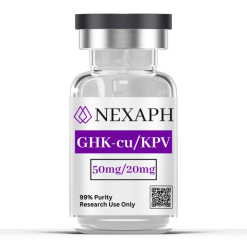
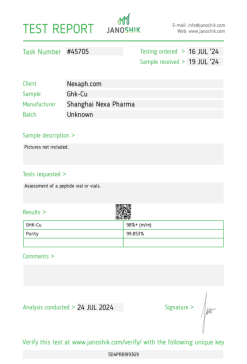
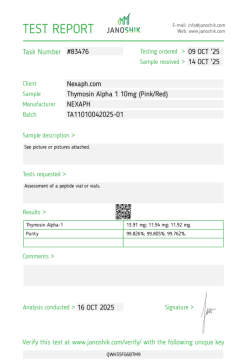
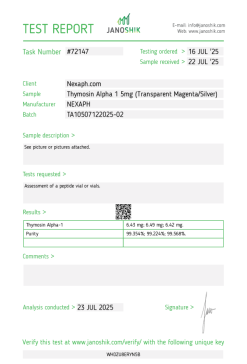
When you choose to buy healing and recovery peptides from Nexaph, you are accessing materials synthesized with surgical precision. Our recovery catalog features world-class research agents such as BPC-157, TB-500 (Thymosin Beta-4), KPV, and GHK-Cu—all verified via HPLC and Mass Spectrometry to exceed 99% purity. In recovery research, the molecular stability of the compound is paramount; even minor degradation can alter the signaling pathways responsible for tissue remodeling. The Nexaph standard ensures that every vial provides the analytical consistency required for high-impact regenerative studies.
Researching Angiogenesis and Soft Tissue Repair
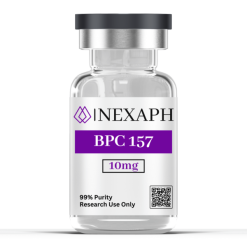
A cornerstone of recovery research is the promotion of angiogenesis—the formation of new blood vessels. Researchers frequently utilize BPC-157 (Body Protection Compound) from the Nexaph peptides collection to study its unique stable gastric pentadecapeptide structure. In in vivo models, BPC-157 is investigated for its potential to accelerate the healing of tendons, ligaments, and muscle tissue by upregulating growth factor expression and modulating the nitric oxide (NO) pathway. Sourcing BPC-157 from Nexaph ensures a lyophilized product free from synthesis byproducts that could otherwise interfere with healing markers.
In addition to gastric-derived peptides, the study of TB-500 (a synthetic version of the active region of Thymosin Beta-4) is critical for investigating cell migration and actin sequestration. Laboratories use Nexaph-sourced TB-500 to explore the molecular triggers for cardiac repair and dermal wound healing. By maintaining a purity level of ≥99%, Nexaph allows researchers to quantify the exact impact of TB-500 on cellular motility and the inflammatory response without the interference of environmental contaminants.
Anti-Inflammatory Signaling and Systemic Recovery
Recovery research often necessitates the modulation of the inflammatory cascade. KPV (Lysine-Proline-Valine) is a potent tripeptide utilized by researchers to investigate the inhibition of pro-inflammatory cytokines through the melanocortin system. Researchers turn to Nexaph for KPV to study its potential in addressing intestinal inflammation and systemic immune responses in specialized animal models. Its small molecular size makes it an ideal candidate for researching transdermal and mucosal delivery systems.
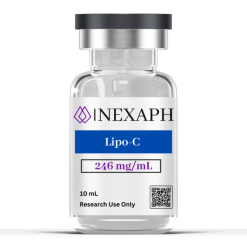
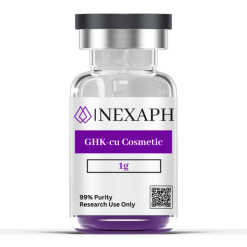
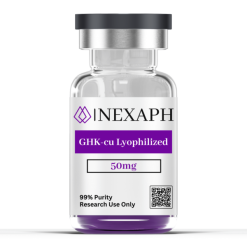
Furthermore, the study of GHK-Cu (Copper Peptide) allows laboratories to explore the intersection of copper homeostasis and gene expression related to tissue remodeling and DNA repair. Nexaph’s commitment to pharmaceutical-grade synthesis ensures that these recovery intermediates are vacuum-sealed in USP Type I borosilicate glass, protecting the delicate peptide bonds from oxidative stress and maintaining biological activity from the lab to the final assay.
Technical Specifications: Recovery Research Standards
| Requirement | Nexaph Analytical Standard |
| Research Category | Regenerative Medicine & Tissue Repair |
| Peptide Purity (HPLC) | ≥ 99.0% |
| Sequence Identity | Verified via Mass Spectrometry (MS) |
| Endotoxin Levels | Tested for Minimal Interference |
| Physical State | Lyophilized Crystalline Powder |
| Storage Environment | Inert Vacuum-Sealed Borosilicate Glass |
Synergistic Modeling: The BPC-157 and TB-500 Protocol
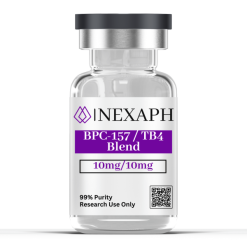
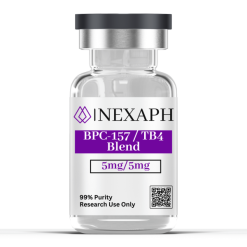
The complexity of biological repair often leads researchers to investigate the “synergistic healing” effect of combining different Nexaph peptides. One of the most common areas of recovery research is the concurrent study of BPC-157 and TB-500. While BPC-157 is often researched for its effects on localized tendon-to-bone healing, TB-500 is investigated for its systemic ability to promote cell migration to the site of injury. Nexaph provides the batch-to-batch consistency required to conduct these dual-peptide studies with reproducible and scientifically valid data.
Related Healing & Recovery Compounds
- BPC-157 5mg & 10mg (Angiogenesis & Tendon Research)
- TB-500 2mg & 5mg (Cell Migration & Actin Research)
- KPV (Anti-Inflammatory & Melanocortin Research)
- GHK-Cu (Tissue Remodeling & Collagen Signaling)
- Thymosin Alpha-1 (Immune Modulation & Recovery Research)
Frequently Asked Questions (FAQ)
How does Nexaph ensure the structural integrity of recovery peptides?
Healing peptides like BPC-157 are sensitive to pH changes and moisture. Nexaph utilizes a proprietary lyophilization process that stabilizes the peptide sequence in a crystalline matrix, ensuring it remains viable throughout shipping and storage.
What is the best storage practice for TB-500 and GHK-Cu?
For maximum shelf-life, Nexaph recommends storing all lyophilized powders at -20°C. Once reconstituted for research purposes, solutions should be refrigerated at 2-8°C and used within the validated stability window.
Can these peptides be used to treat sports injuries in humans?
No. All products, including Nexaph peptides in the healing category, are strictly for laboratory research use only. They have not been approved for human use or clinical applications by the FDA.
Why is 99% purity essential for recovery studies?
In regenerative research, contaminants can trigger immune responses that either mask or artificially accelerate the healing process. Nexaph’s ≥99% purity ensures that the observed regenerative effects are solely attributable to the peptide under investigation.
🛑 CRITICAL: RESEARCH USE ONLY 🛑
ALL PRODUCTS LISTED UNDER THE HEALING & RECOVERY PEPTIDES CATEGORY ARE INTENDED STRICTLY FOR LABORATORY RESEARCH USE ONLY.
THEY ARE NOT FOR HUMAN OR VETERINARY CONSUMPTION, INGESTION, OR INJECTION.
NEXAPH COMPOUNDS ARE NOT APPROVED BY THE FDA FOR ANY MEDICAL, DIAGNOSTIC, OR THERAPEUTIC APPLICATIONS.
PURCHASE AND USE ARE RESTRICTED TO QUALIFIED PROFESSIONALS. ANY MISUSE IS STRICTLY PROHIBITED.